My first mobile game: Strait Escape
A naval adventure puzzle game inspired by GeoMinesweeper. Here's the story of how it came to be.
Overview
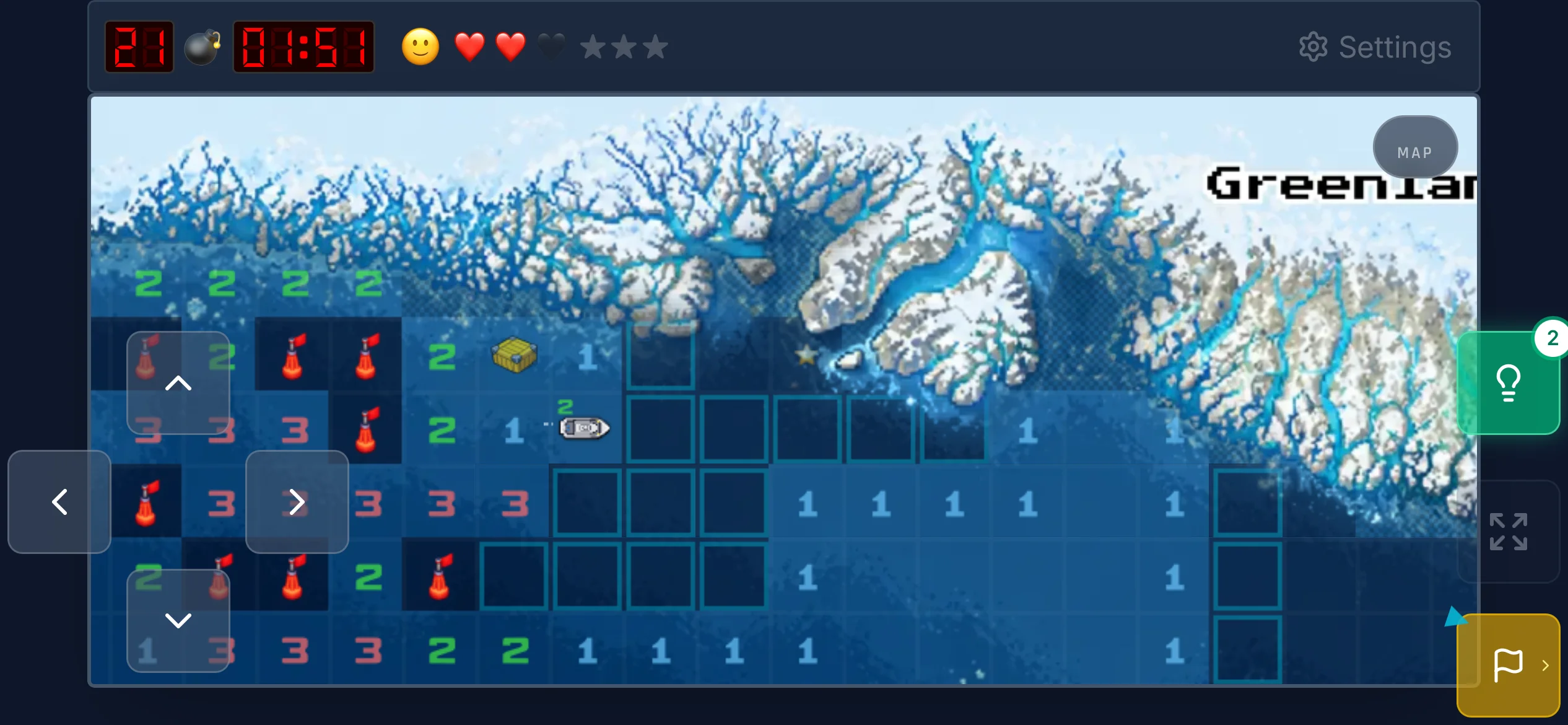
Strait Escape is Minesweeper reimagined as an adventure. You play as a ship captain navigating treacherous waters, revealing the seabed cell by cell to safely reach your destination and clear mines from the shipping routes.
Gameplay
The core mechanics build on classic Minesweeper: cells are either mines or numbers indicating adjacent mines. I added Fog of War, collectible items, visual effects, sound design, and a bonus/star system to heighten the sense of exploration and reward.
The dual-hand controls — left for movement, right for abilities — create an action-game feel. What sets this apart from traditional Minesweeper is the puzzle board itself: instead of a rectangular grid, each level is shaped to match real-world straits and maritime zones (Strait of Hormuz, Black Sea, Scapa Flow, etc.).
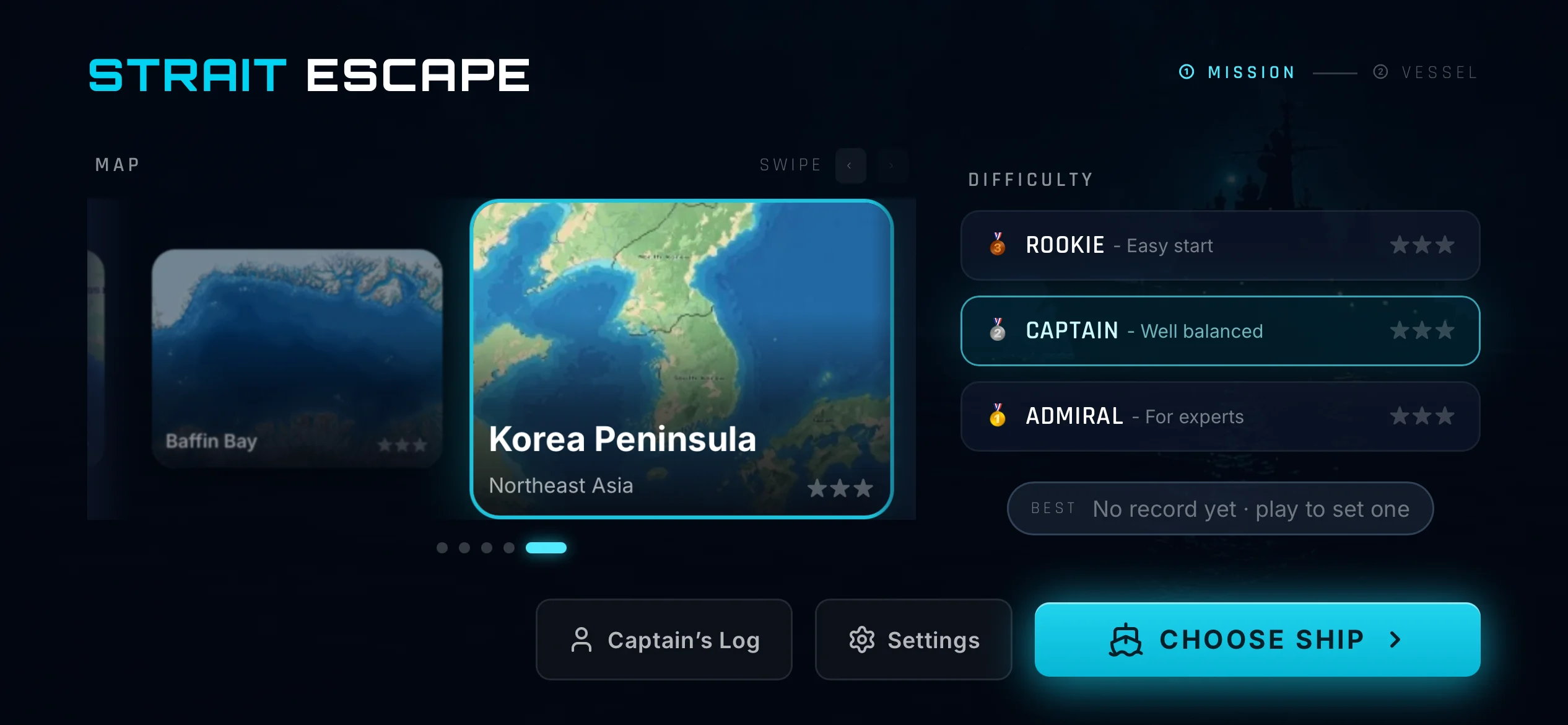
Unlike classic Minesweeper, where you see the entire board at once, Strait Escape reveals only the area around your current position through a moving camera viewport and Fog of War. You discover cells incrementally as you move.
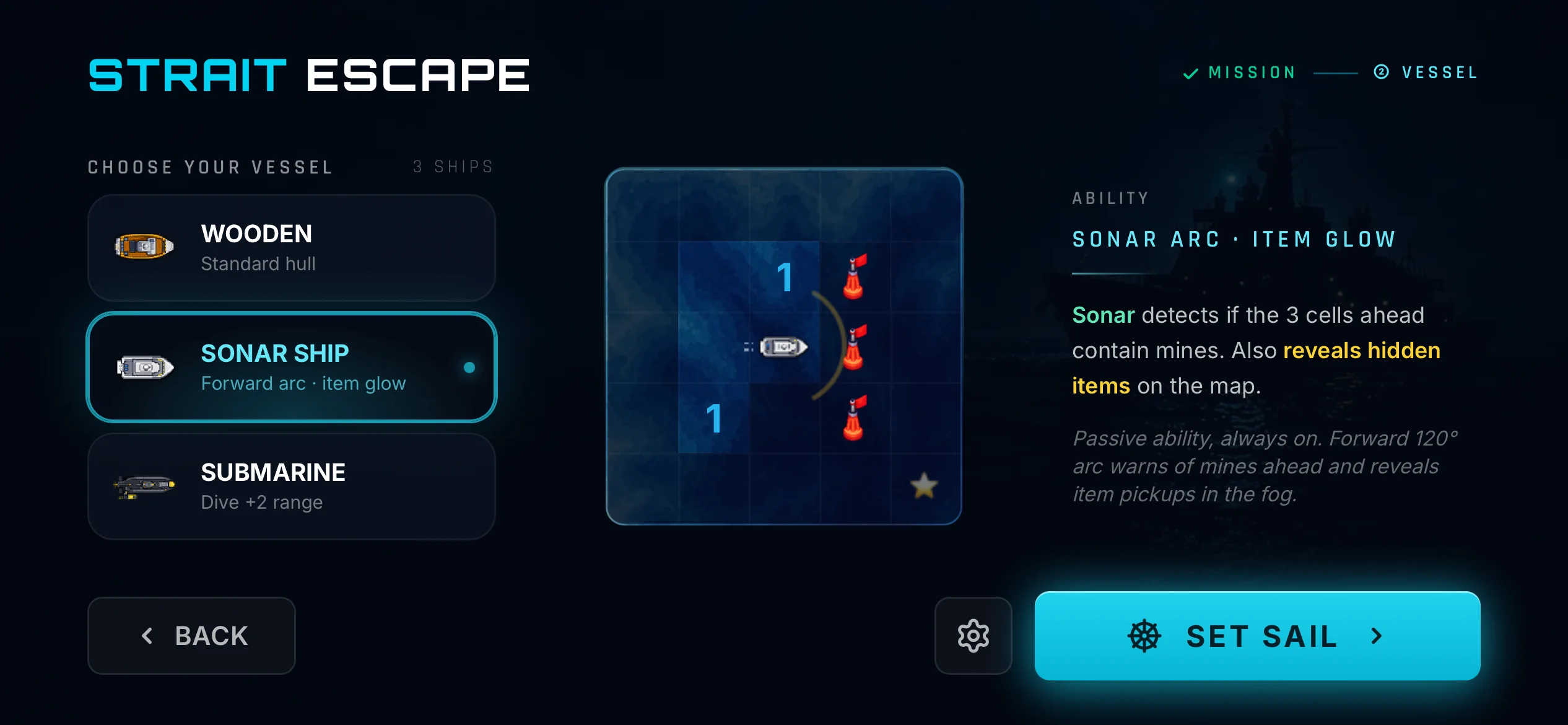
You start with a basic ship equipped with essential tools like Reveal and Chord. As you progress, you unlock specialized ships: the Sonar Ship, which helps solve difficult scenarios with advanced scanning, and the Submarine, which lets you dive down and resurface elsewhere — breaking the typical adjacent-only movement pattern.
Why I built this
I wanted to transform Minesweeper from a static board puzzle into an adventure where you're exploring and clearing mines across famous waterways around the world. There's something compelling about the idea of "mine clearance operations" in real maritime locations.
I'd never built or shipped a mobile game before, so this was both a creative and technical challenge I couldn't pass up.
How I built this
The challenges
-
The core challenge is game design. I've played many games but never designed one. The hardest part was balancing difficulty — making it engaging without being trivial. Adding ship abilities helps solve puzzles but also makes it easy to trivialize levels if you're not careful.
-
I also struggled with asset creation (sprites, maps, sound) — all new territory for me.
-
Adapting to multiple screen sizes, portrait/landscape modes, and different input methods (touch for mobile, keyboard and mouse for web) across all platforms required substantial engineering effort and comprehensive testing.
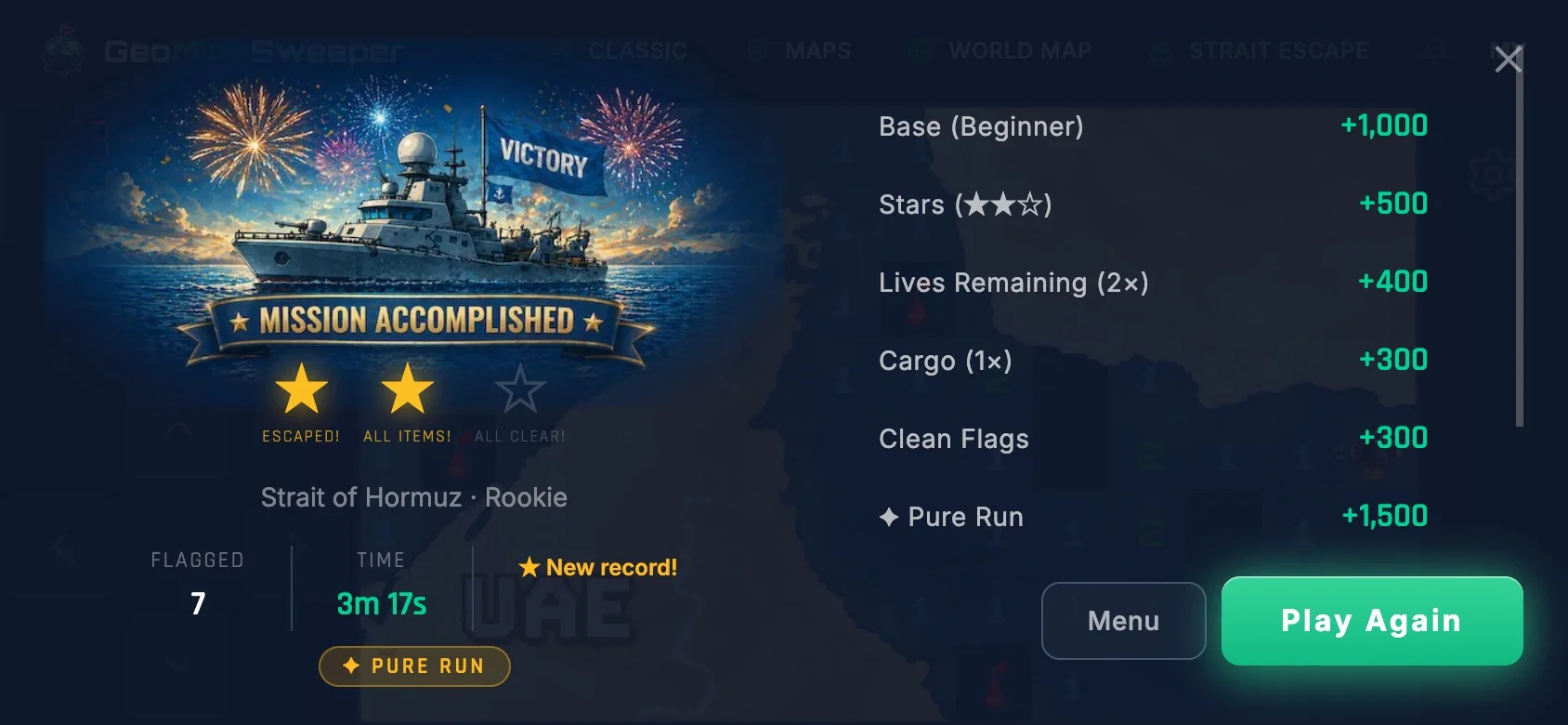
The timeline: I completed this game in 2 weeks — from concept to MVP, asset creation, testing, multiple maps and scenarios, monetization integration (Admob/IAP), and App Store/Play Store submission. I put in roughly 15 hours a day to make it happen.
Of course, I couldn't have done this alone. AI support was essential throughout.
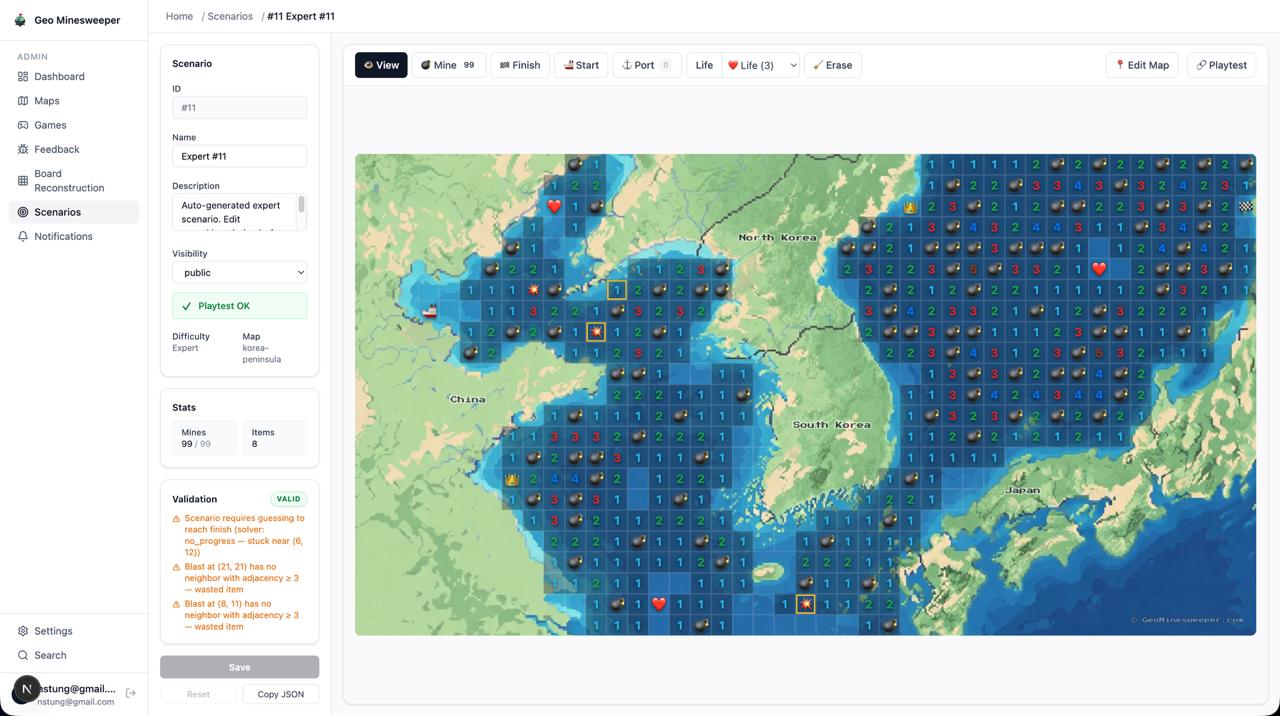
On the engineering side:
- Cross-platform game running on iOS, Android, and web via React and Capacitor
- Admin app for visual map and scenario editing
- Scripts to generate maps procedurally and validate them (e.g., checking if paths are traversable)
- Monorepo + shared packages for code reuse
- 800+ automated tests (unit, RTL, e2e) to compensate for working solo without QA; Playwright for web, Maestro for mobile
On graphics:
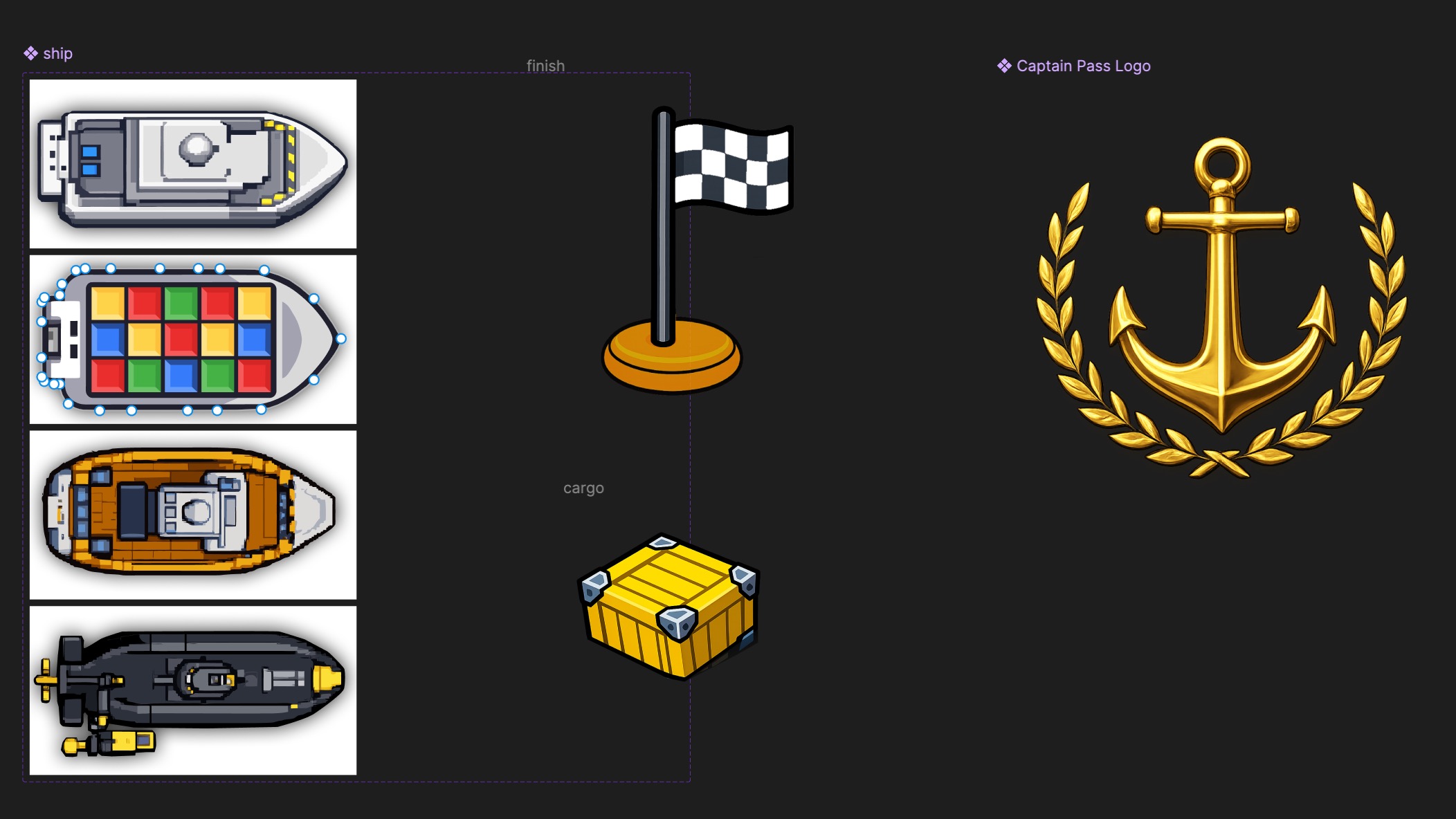
- ChatGPT was invaluable for brainstorming and image generation. I found it more "creative" than other tools — exactly what game design needed
- Workflow: brainstorm with ChatGPT → generate images → edit in Photopea → convert to vector → final polish in Figma → export for the game
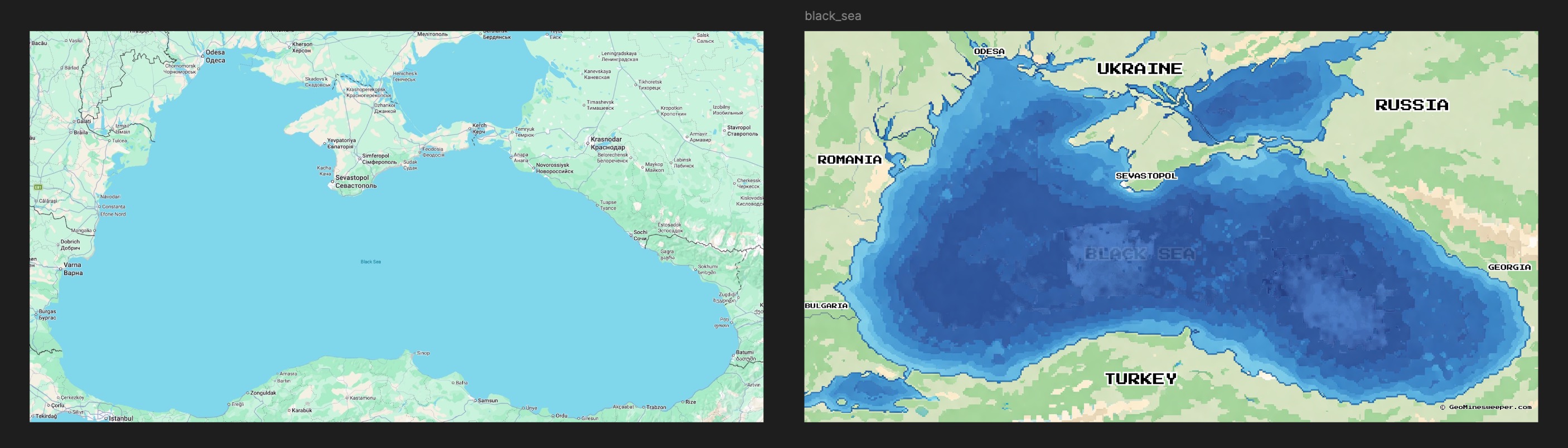
- For maps, I used real satellite imagery and had AI restyle it into a pixel-game aesthetic. I spent serious time crafting prompts to generate consistent, on-brand map imagery
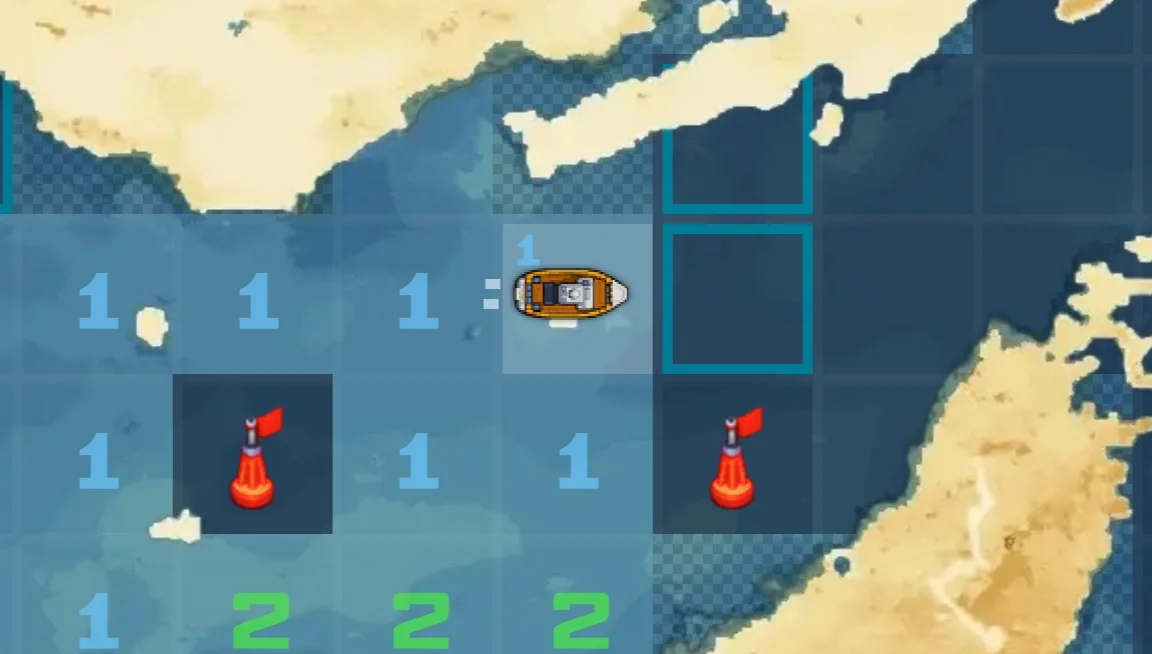
For each map, I separated it into two distinct layers — water and land — to prevent game cells from overlapping the terrain. The cells are "clipped" by the land layer itself, creating a more cohesive and visually harmonious map.
On audio:
- Used ElevenLabs to generate SFX and background music
Tech stack
React, TailwindCSS, Capacitor
Recap
Building this game was deeply rewarding. As someone who constantly generates ideas, I found genuine satisfaction in turning concepts into reality. The most important lesson I learned: not every idea deserves to be built — too many of them spark in my head every day. You need clear constraints: a well-defined MVP, concrete milestones, a sharp definition of what counts as "playable" gameplay — and then you have to prioritize ruthlessly.
I'm not a game designer by trade, so this isn't a career pivot. But I'm now more open to exploring new game concepts if the right inspiration comes along — something compelling enough to justify the effort.